



Fix Your Cracked Teeth
Available in Burnsville, Eden Prairie, Inver Grove Heights & Woodbury MN
What are the symptoms of Cracked Teeth?
Cracked teeth demonstrate many types of symptoms, including pain when chewing, temperature sensitivities, or even the release of biting pressure. It is also common for tooth pain to come and go, making it difficult to diagnose the cause of discomfort.What happens if I don’t treat my cracked teeth?
Chewing can cause movement of the cracked pieces of your tooth, and the pulp within the tooth becomes irritated. At the same time, when biting pressure is released, the crack can close quickly, resulting in sharp pain. Eventually, the pulp will become damaged and the tooth will consistently hurt, even when you are not chewing.
It is possible that cracks can lead to infection of the pulp tissue, which can spread to the bone and gum surrounding the problematic tooth.
Experience Exceptional Service & Quality Endodontic Care
Call Us Now to Find the Relief You Deserve!
What are different types of cracks in teeth?
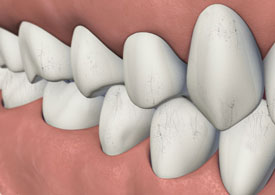
Craze lines
These are tiny cracks that only affect the outer enamel of the tooth. These cracks are more common in adults. These types of cracks are superficial and are usually of no concern.
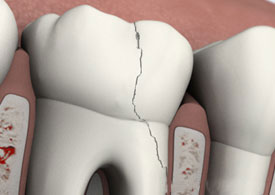
Fractured Cusp
When a cusp becomes weakened, a fracture may result. The cusp may break off or be removed by a dentist. A fractured cusp rarely damages the pulp, so root canal is not necessary. Your dentist will usually restore the tooth with a full crown.
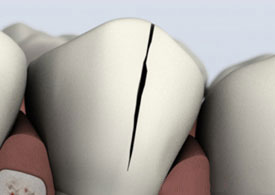
Treatable Cracked Tooth
This type of crack extends from the chewing surface of the tooth and vertically migrates towards the root. In some cases, the crack may extend below the gum line. It is possible for the crack to extend further into the root. Damage to the pulp is commonplace. In this case, root canal treatment is usually necessary. A cracked tooth that is not treated will worsen, resulting in the loss of the tooth. Therefore, early detection is essential.
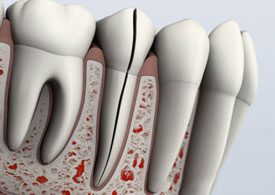
Split Tooth
A split tooth is usually the result of an untreated cracked tooth. It can be identified by a crack with distinct segments. This type of tooth can never be saved intact. Yet, the position and extent of the problem will dictate whether any portion of the tooth can be saved. Sometimes, endodontic retreatment by doctors and restoration by your dentist can be used to save a portion of the tooth.
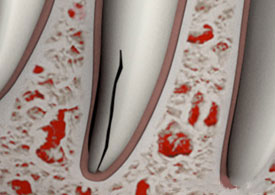
Vertical Root Fracture
A vertical root fracture begins at the root and extends towards the chewing surface of the tooth. Unfortunately, they show minimal symptoms and may go unnoticed. Consultation, often times with CBCT, is advised prior to extraction.
Additional Information
- What to Expect on Your First Visit
- Information on Scheduling
- Learn about our Financial Policy
- What we offer for Insurance
- Typical Endodontic FAQs
- Meet our Endodontics Specialists
- Get Contact Information